
How to Verify Land Documents in Nigeria Before You Buy Property
Introduction: Securing Your Investment Through Diligent Verification
Investing in Nigerian real estate, whether for residential, commercial, or speculative purposes, offers immense potential. However, the process can be fraught with risks if proper due diligence is not observed. One of the most critical steps in any property transaction is the verification of land documents. This safeguards your hard-earned money against fraudulent claims, multiple sales, or properties with encumbrances.
At Garnet Bricks, we understand the concerns of Nigerian property buyers, land investors, and our esteemed diaspora clients. This comprehensive guide will walk you through the essential steps to verify land documents before buying property in Nigeria, ensuring peace of mind and a secure investment.
Why Is Land Document Verification Essential?
The Nigerian land administration system, while robust, can be complex. Without proper verification, you expose yourself to:
- Land Scams: Fraudsters often create fake documents or sell land that doesn't belong to them.
- Disputes: Purchasing land with unverified documents can lead to prolonged legal battles over ownership.
- Loss of Investment: A fraudulent transaction can result in the complete loss of your capital.
- Future Encumbrances: Unverified documents might hide existing mortgages, liens, or government acquisitions.
Key Land Documents to Verify
 Inline image 1
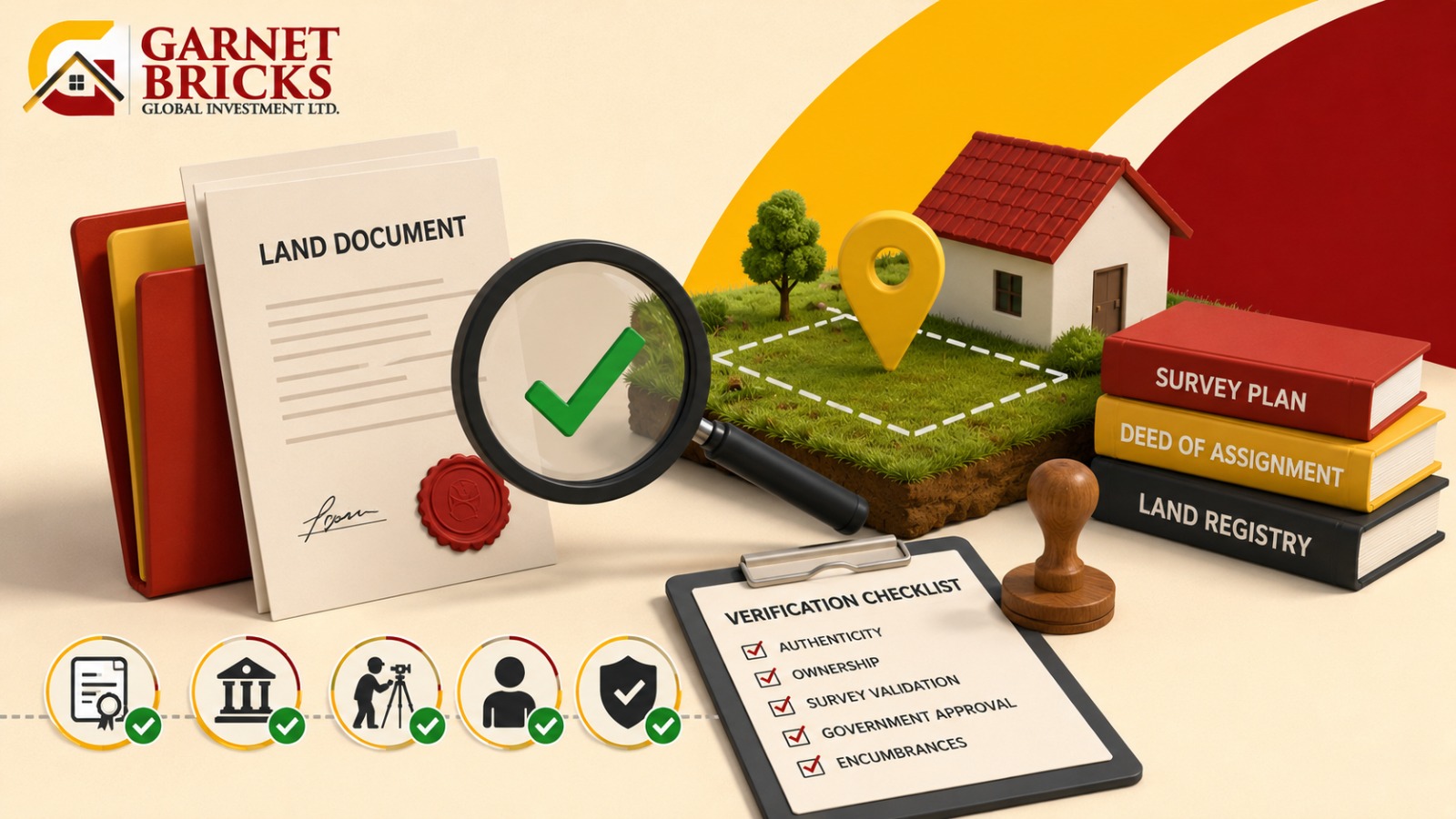
Before proceeding with any land purchase, ensure you scrutinize the following critical documents:
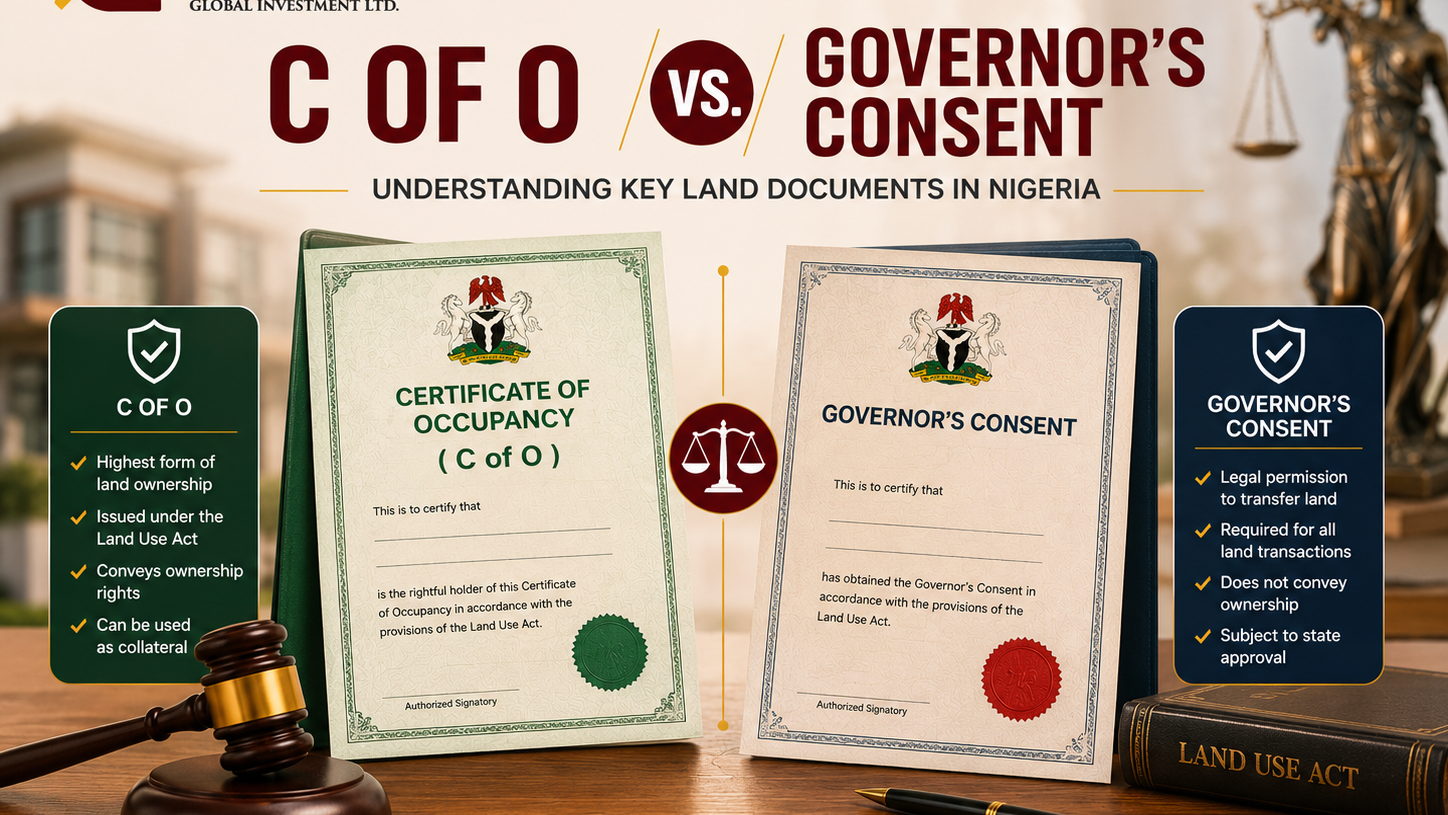
1. Certificate of Occupancy (C of O)
The C of O is a crucial document issued by the State Governor, certifying that a person has the right to occupy a piece of land for a term, usually 99 years. It is strong evidence of ownership.
2. Deed of Assignment
This legal document transfers ownership of land from the seller (assignor) to the buyer (assignee). It must be duly executed, stamped, and registered at the appropriate land registry to be legally valid.
3. Survey Plan
A Survey Plan is a graphical representation of the land, showing its precise location, boundaries, dimensions, and sometimes features. It is prepared by a registered surveyor and helps prevent boundary disputes.
4. Governor's Consent
For properties where the C of O has already been issued and transferred, subsequent transfers require the Governor's Consent. This signifies the Governor's approval of the transaction.
5. Excision and Gazette (For Community Land)
If the land is community land, an Excision document confirms that the land has been released by the government to the community. A Gazette is a legal notice published by the government, often listing excised lands. These are vital for lands originally designated as government acquisition areas.
6. Purchase Receipt
While not a title document, a receipt serves as proof of payment and should clearly state the amount paid, the property description, and the parties involved.
Step-by-Step Land Document Verification Process
Follow these essential steps to conduct thorough due diligence:
Step 1: Conduct a Physical Site Inspection
Always visit the land in person. This helps you:
- Confirm the exact location and boundaries as per the survey plan.
- Check for any existing structures or occupants that might indicate disputes.
- Assess the land's topography, soil quality, and accessibility.
- Identify any potential environmental hazards or infrastructure challenges.
Step 2: Verify the Survey Plan
Take the survey plan to the office of the Surveyor General in the respective state. They can confirm its authenticity and ensure the land coordinates are accurate and not subject to government acquisition or multiple allocations.
Step 3: Verify the Certificate of Occupancy (C of O) or Other Title Documents
This is a critical step. Engage a legal professional to conduct a title search at the State Lands Registry. The search will confirm:
- The authenticity of the C of O or other title documents (e.g., Deed of Assignment, Governor's Consent).
- The actual registered owner of the property.
- Whether there are any existing encumbrances, liens, or court injunctions on the property.
- The history of the property's ownership.
Step 4: Verify Excision and Gazette (If Applicable)
For lands that fall under community acquisition, verify the Excision and Gazette at the Ministry of Urban and Regional Planning or the Lands Bureau. This ensures the land has been genuinely released from government acquisition.
Step 5: Verify the Seller's Identity and Ownership
Confirm the seller's identity using valid identification (e.g., National ID, passport). Ensure the person selling is indeed the legal owner or has legitimate authority to sell the property. If dealing with an agent, verify their mandate from the owner.
Step 6: Engage Legal Professionals
It is highly recommended to engage a reputable real estate lawyer. They will:
- Review all documents thoroughly.
- Conduct the necessary searches at the Lands Registry and other relevant agencies.
- Advise you on any red flags or potential issues.
- Draft a legally sound Deed of Assignment and other transaction documents.
Frequently Asked Questions
- What are the most important documents to verify before buying land in Nigeria?
The most crucial documents include the Certificate of Occupancy (C of O), Deed of Assignment, Survey Plan, and Governor's Consent. For community lands, Excision and Gazette documents are also vital. - How can I confirm land ownership in Nigeria?
You can confirm land ownership by conducting a title search at the State Lands Registry with the help of a legal professional. This will reveal the registered owner, property history, and any encumbrances. - What should I do if I suspect a land document is fake?
If you suspect a document is fake, do not proceed with the transaction. Immediately engage a legal professional to verify the document's authenticity at the relevant government agencies (e.g., Lands Registry, Surveyor General's office). It's always safer to walk away from suspicious deals. - Can I verify land documents if I'm a diaspora client?
Absolutely. While you may not be able to visit in person, you can engage trusted professionals like Garnet Bricks and our network of legal experts to conduct all necessary verifications on your behalf, providing you with detailed reports and assurances. - Besides documents, what else should I check when buying land?
Beyond documents, always conduct a physical site inspection, check zoning and land use regulations, assess access to utilities and infrastructure, evaluate topography and soil quality, and review the property's history.
Conclusion
The process of buying land in Nigeria demands meticulous attention to detail, especially when it comes to verifying land documents. This due diligence is your strongest defense against fraud and ensures your investment is secure and legally sound. By understanding the key documents and following a systematic verification process, you can navigate the complexities of the Nigerian real estate market with confidence.
Call to Action
Don't leave your property investment to chance. At Garnet Bricks, we specialize in guiding Nigerian property buyers, land investors, and diaspora clients through safe and legitimate real estate transactions. Contact us today for expert assistance with land document verification and to discover secure investment opportunities across Nigeria.


Comments
Comments are reviewed before they appear publicly. Share your thoughts using your name and email address.